

More and more we are considering our impact on the environment. Many people are making changes, both small and large in an effort to be more environmentally conscious. It might seem that having a baby involves a lot of consumption but there are many ways to reduce the impact of your new arrival on our planet. Often making better choices can have a hefty price tag, but lots of eco swaps around little ones can even save some pennies as well as the environment. I don’t know about you but that’s music to my ears!
Let’s take a look at some of the green choices we can make to help look after the planet for our children, grandchildren and future generations.
Feeding
Hands down the most environmentally friendly option for nourishing your newborn is to breastfeed. There are no manufacturing emissions, no road/air miles and no packaging waste. With no boiling kettles, running sterilisers, washing equipment and making up formula it reduces your households water and electricity usage. Plus it totally bypasses the dairy industry which is considered to have an appreciable effect on climate change. If you choose reusable rather than disposable breast pads then exclusive breastfeeding is pretty much zero waste. As an added bonus, not buying formula will save you plenty of cash over the first year!
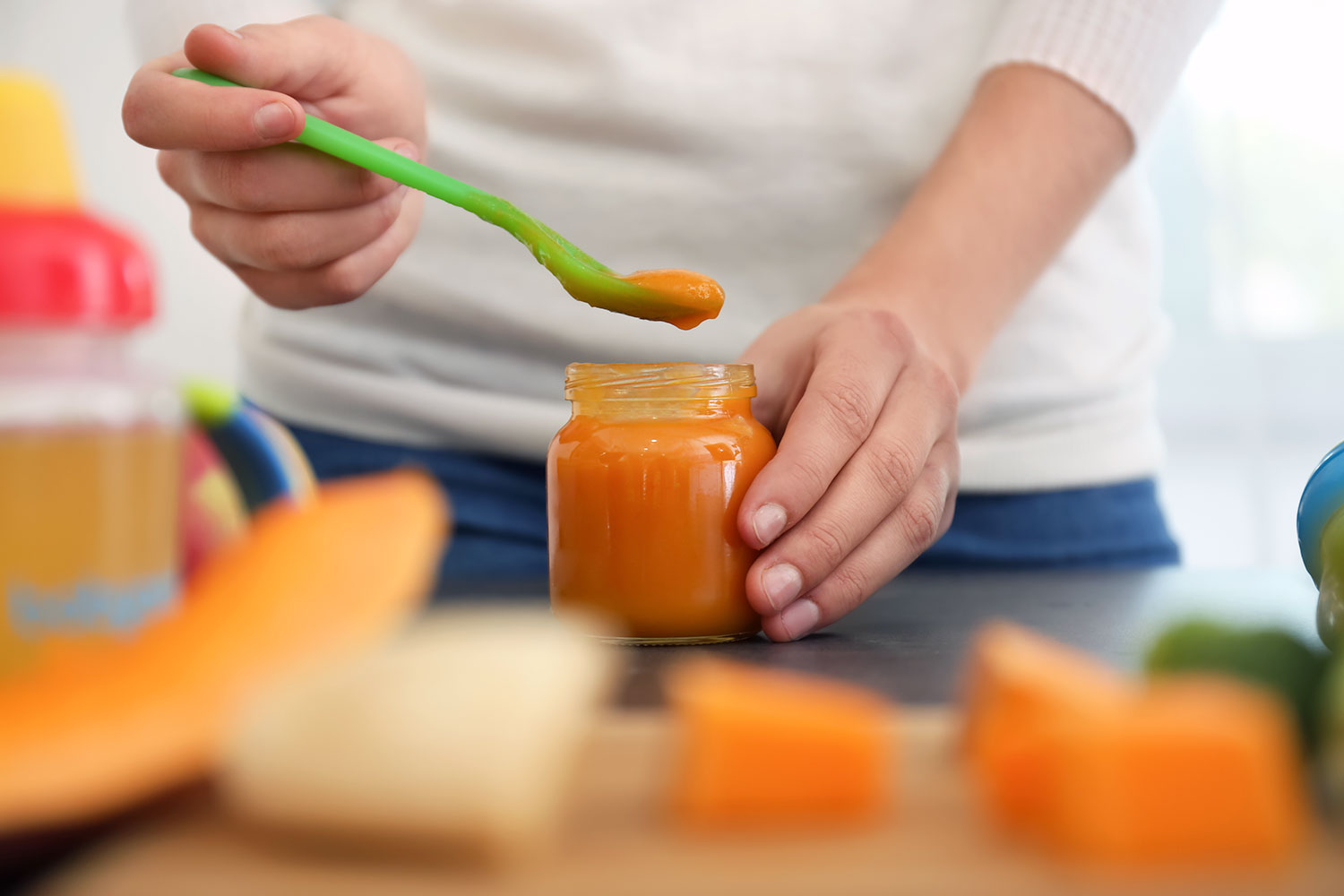
As baby grows and starts to transition on to solid foods you will find a huge range of ready made foods available in the supermarkets – purées in jars, mini ready meals in microwaveable trays, packets of snacks and more. Environmentally speaking, preparing your own food for baby from scratch is better, especially if you can buy locally produced ingredients. It reduces manufacturing and transport emissions and packaging waste. It is also better in terms of nutrition for your little one and in terms of finances for you.
We can see that breastfeeding exclusively for six months and then adding in homemade baby food made from locally sourced ingredients is the ideal, but this is not always practical. Many families for a variety of reasons use formula milk either exclusively or as a supplement to breastfeeding, and there’s no denying the convenience of commercial baby food when you’re busy taking care of your family and likely sleep deprived! So you might be thinking, if we are going to use formula and/or ready made food can we still make better choices?
The answer is yes, consider:
- Powdered formula rather than liquid
- As powdered formula is essentially ‘concentrated’ the packaging requirements and transport costs are reduced compared to an equivalent number of feeds of liquid formula.
- Formula packaging
- Some formula is packaged in metal tins, some in mixed materials containers, others still in foil and cardboard. Check the packaging and your local recycling services to see which can be recycled rather than sent to landfill.
- Baby food packaging
- The little glass jars that baby food comes in can be reused for all sorts of things and of course is also recyclable. Some supermarkets now have recycling points that accept crisp packet type packaging. Pouches are more difficult to recycle but there are places that will take them, check out www.terracycle.com to find your nearest location.
- Baby food quantities
- Try to choose portions that match your baby’s appetite and follow the safe storage instructions to reduce food waste.
Changing
By the time your baby is potty trained you will have changed around 4000 nappies – that’s a lot of pee, poop and plastic!
It’s fairly well known now that disposable nappies take 500 years to decompose. That knowledge has driven many parents to look for more environmentally friendly alternatives for their eco baby.
Eco nappies
- Despite being marketed as an environmentally conscious choice, eco nappies are often not all that much better than regular nappies.
- Pros
- Often contain far fewer chemicals. Less perfumes, dyes and bleaching agents. This is better for baby’s skin and has a lower environmental cost of the manufacturing process.
- Often use more sustainable materials in production.
- Cons
- Eco nappies are still sent to landfill. Just like regular disposable nappies they will take half a century to breakdown there.
- Can be quite expensive compared to regular disposables
Cloth nappies
Cloth nappies are easily the better choice environmentally. Even taking into consideration the manufacturing process and the laundry generated they have a much smaller impact on the planet. Reusable nappies can be used for multiple babies. When they are no longer fit for use as a nappy they can still be useful as rags for dusting and cleaning.
Although reusable nappies can be expensive to buy at first, by the time baby is potty trained they will have cost far less per change than disposables. If you use them for more than one child the environmental and financial benefits are increased further. Reusable nappies can be sold on to recoup some outlay and you could buy secondhand to save money and the environment!
Modern cloth nappies are a world away from the terry squares and plastic pants of previous generations (though terry squares are still available and a financially savvy choice). They are shaped like disposable nappies and easy to put on and change. Using cloth nappies full time will add just two or three laundry loads each week.
Interested in cloth but don’t want to spend a lot on something that doesn’t work out? There are many places where you can buy sample kits or even loan a kit to try before you buy.
Many families choose to combine both reusable and disposable nappies. Perhaps using disposables overnight, or only using cloth when at home. It can be a good way to balance a busy lifestyle (and growing laundry pile!) with looking after the planet.
Wipes
Wipes have become the ‘big bad’ of baby care. Containing lots of plastic they take decades to biodegrade, and are often flushed down the loo causing blockages and contributing to ‘fatbergs’. They are super convenient, but it is also one of the easiest swaps you can make. If you are using cloth nappies then cloth wipes are a no brainer. Even if you are using disposables you can use cloth wipes, and even if you still use wet wipes for dirty nappies and cloth for wet nappies you will reduce the amount of wipes sent to landfill.
For mucky faces and hands nothing beats a damp flannel. Pop one in an airtight container in your change bag for when you are out of the house.
Clothing, toys and other equipment
‘Reduce, reuse, recycle’ is the eco mantra so let’s apply that to all things baby!
-
Reduce
- Babies grow quickly so don’t go mad buying lots of clothes and toys for each stage as they may not get the use from them all!
- Look for adjustable ‘grow with me’ clothes that cover a range of sizes.
- Some toys are designed to be adapted as baby grows to provide appropriate stimulation at different ages and stages.
- A cot that can become a bed, a baby high chair that converts to a toddler seat, a multistage car seat, look for items that will cover multiple stages to reduce both consumption and financial impact.
-
Reuse
- If you’re planning more children in the future and have storage space then hang on to all your baby bits for the next time round.
- Pass on and receive hand-me-downs from friends and family.
- Buy from charity shops, pre-loved sales, eBay and Facebook marketplace (and donate or sell your own outgrown items here too).
- Try a toy library, either online, or look for one in your community.
- Do a toy swap with a group of friends.
N.B. It is important that baby mattresses and car seats are bought new for safety reasons.
Recycle
-
- Cut the feet off baby grows that are too stained to pass on to get a little longer out of them.
- Clothes, bibs and other textiles that are not fit for reuse can become cleaning rags. Alternatively they can be donated at charity shops and textile banks to be recycled into fillings and packaging.
- Non-electronic Hasbro toys and games can be recycled through a Terracycle scheme.
Has this article inspired you to make some eco swaps and bring up an eco baby? Perhaps you have some green tips of your own that you could share with our community?